

STORY READER
Ending to Begin
The bridge beyond the stage was still dim.
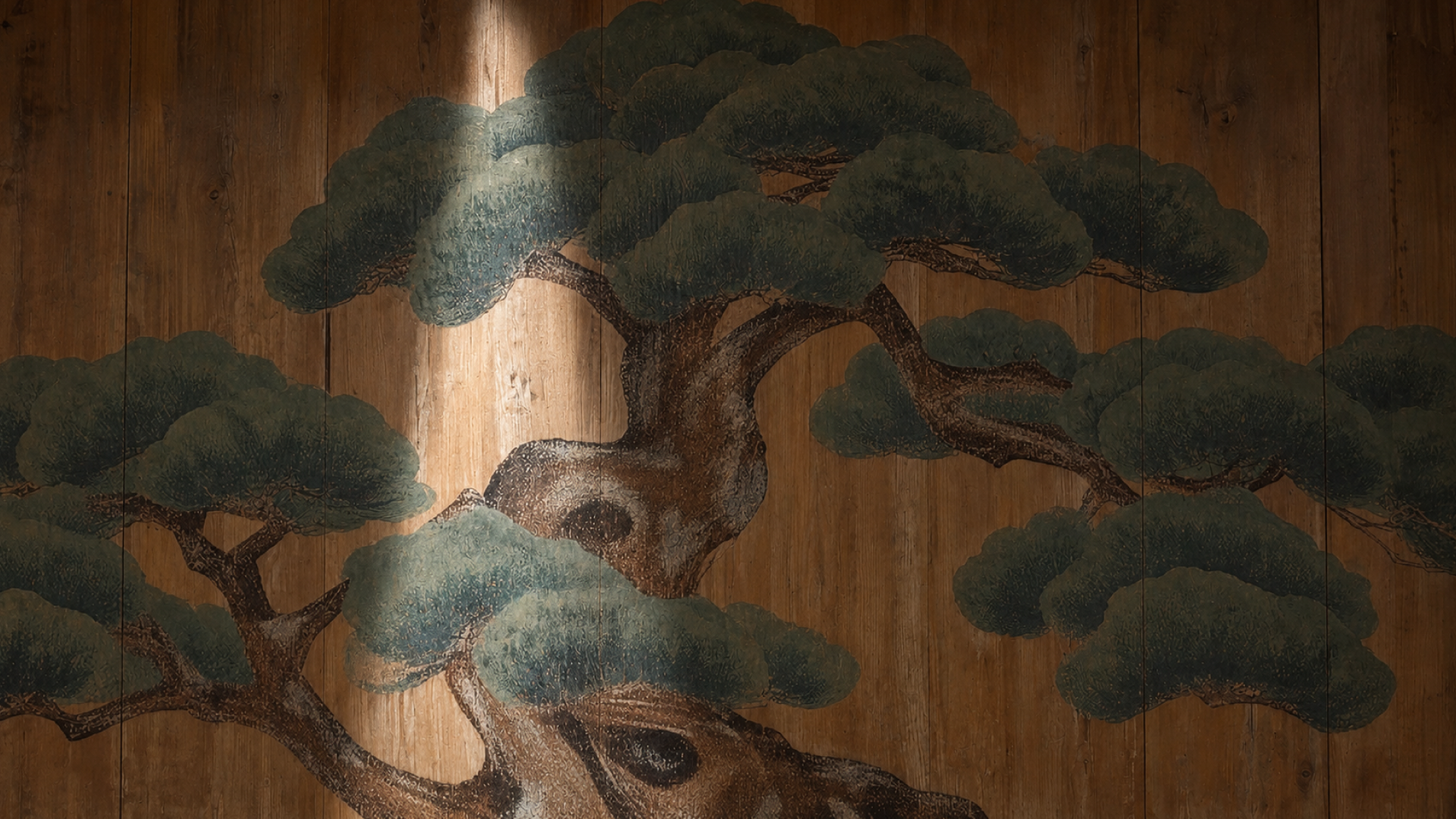
Though the performance had ended, the stage itself did not feel finished. The wooden floor, polished by years of footsteps, absorbed the light instead of reflecting it. As Gabi stepped forward, the boards received his weight gently, as if they remembered others before him. The painted pine on the back wall appeared closer now. From this distance, he could see the thickness of each brushstroke. There were no decorations, yet the space did not feel empty. Time seemed to rest inside it.
In the dressing room beyond, the calligrapher stood quietly. It was hard to believe she had just commanded the stage with a brush larger than her arm.
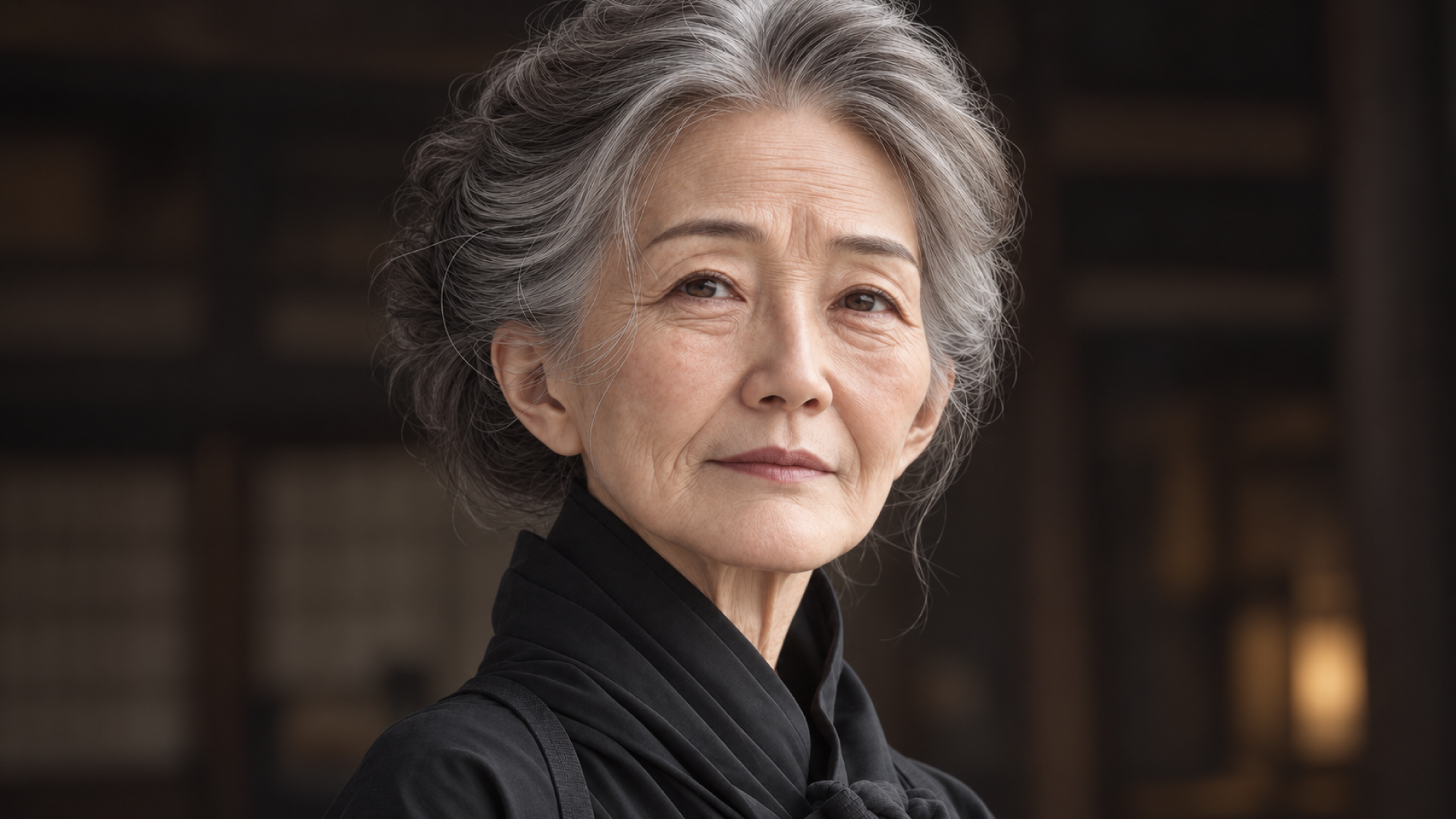
When she saw Gabi, her eyes softened.
“You came.”
The words were simple, but they carried something older than the moment.
The calligrapher, Kazan, placed a blank sheet of paper on the table.
“That piece has ended.”
She did not move immediately. The silence was not empty; it was arranged, like a held breath. The echo of the flute still lingered somewhere behind Gabi’s ears.
Then she let a single drop of ink fall at the center of the page.
Black broke the white.
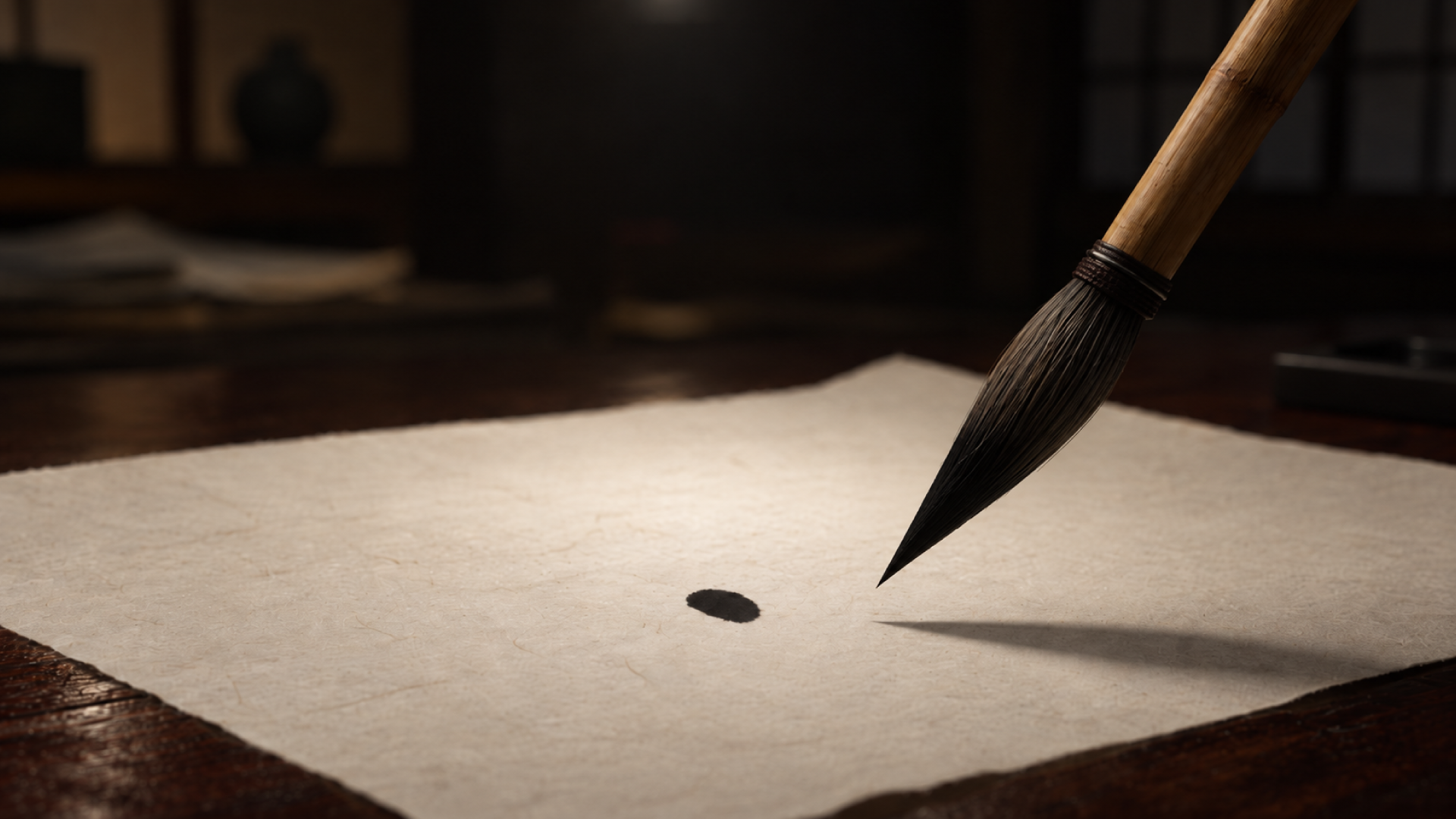
Nothing had been drawn, and yet everything changed. The empty surface did not shrink. The space around the dot remained wide and untouched. But once the point was placed, the white was no longer only white. A center existed. The rest of the space gained position in relation to it.
Gabi stopped breathing.
With only one mark, the paper had become a world.
Something stirred inside him. A scent like ink, faint and distant. A memory not fully formed—white paper seen from the height of a child, his mother’s fingers holding a brush, a small sound in the quiet of night as ink met surface. He did not remember it clearly. Yet when that dot was placed, something inside him felt placed as well.
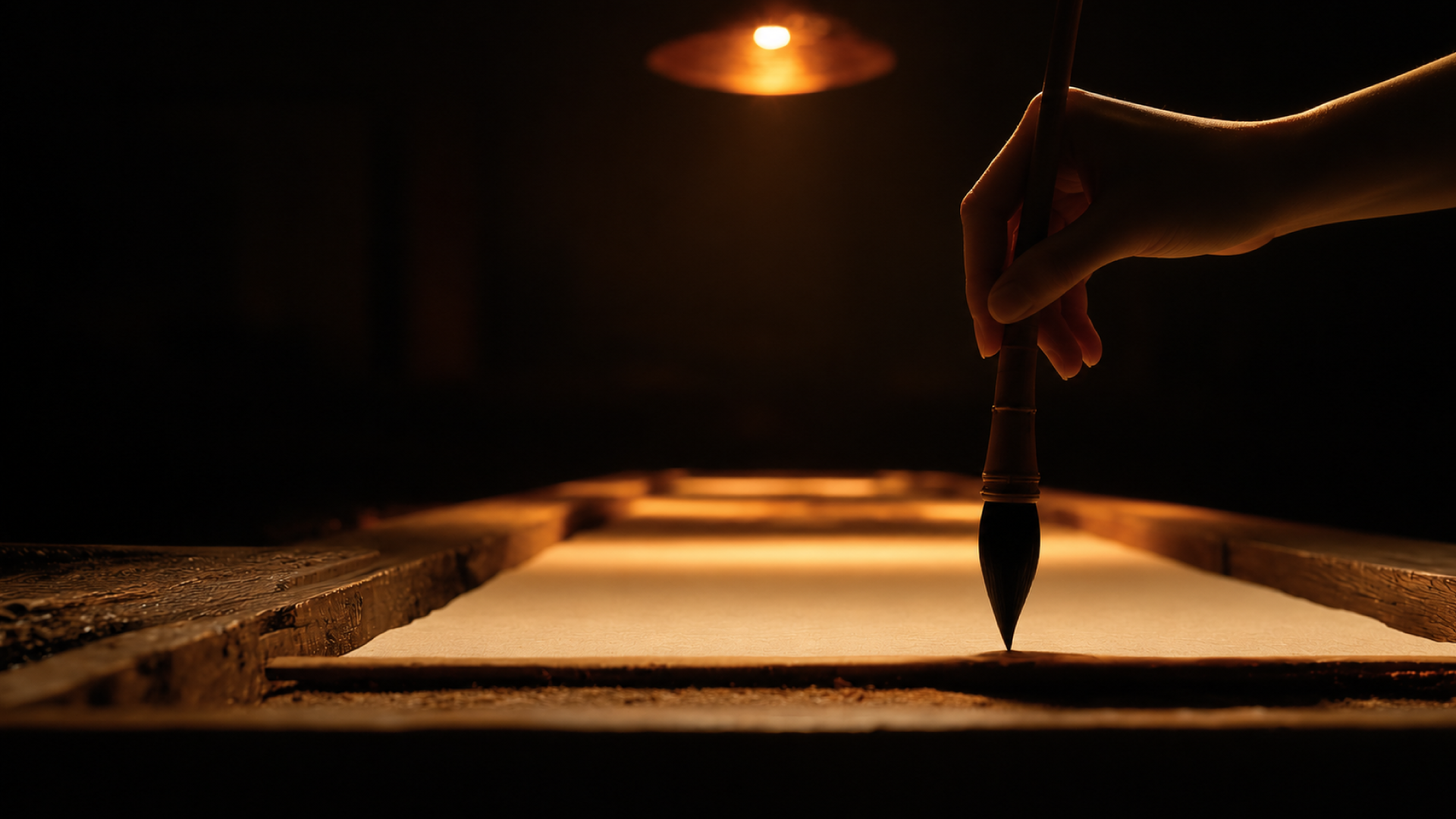
“You think it ended,” she said softly.
Gabi nodded.
“But nothing truly begins until something is finished.”
The ink slowly spread, finding its shape within the fibers of the paper.
“In our tradition,” she continued, “we call it jo-ha-kyu.”
She drew a fine line and paused.
“Jo is not simply a beginning. It is the act of setting something down. Of placing what came before.”
She moved the brush again, breaking the balance slightly.
“That is ha.”
Then she lifted the brush.
“Kyu is not speed.”
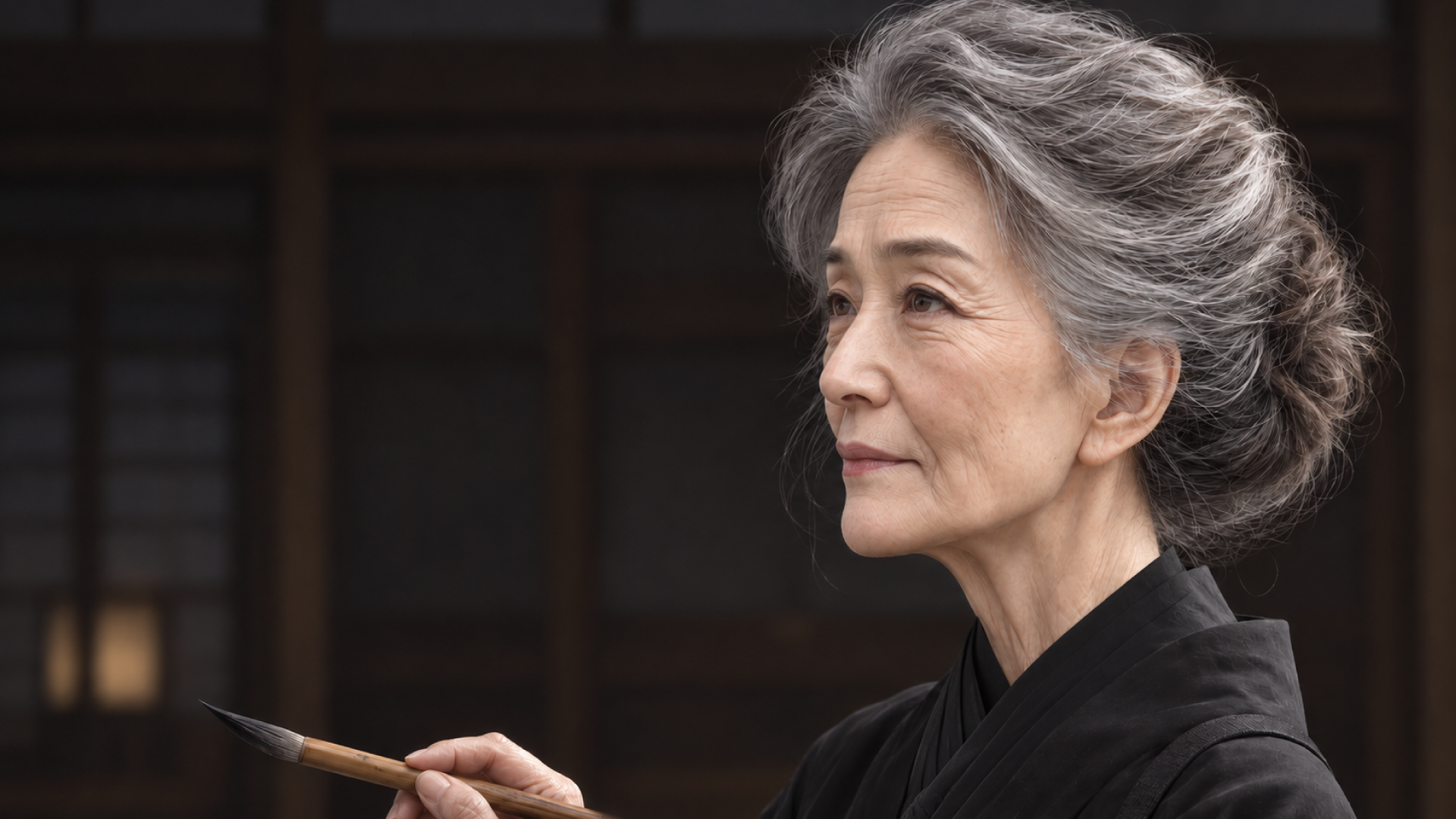
She looked at him.
“It is placement.”
Gabi frowned slightly.
“Placement?”
“Where you place the ending,” she said, “becomes the next beginning.”
The room grew still.
“Kyu is not the rush. It is where you put the breath down. And the next breath begins there.”
The words did not sound like theory. They carried the same weight as the drop of ink.
Gabi realized he had always thought of kyu as acceleration. Build-up, peak, explosion. But the kyu in front of him now was something else. Stopping. Placing. Letting where a thing was placed decide what came next.
“The circle turns,” she added. “But it never returns to the same place. The way you place it changes everything.”
Gabi thought of the soba shop. There is no second time, the owner had said. The bowl had looked the same, yet it was not the same.
She watched him for a moment longer.
“Your mother worked so hard.”
The boards beneath his feet felt cooler.
“Right to the end, she tried to finish things herself.”
There was nothing tearful in it. She placed it as fact, nothing more. The way she placed it echoed everything she had just said.
“Ending is frightening,” she said. “But without ending, you cannot enter the next jo.”
Outside, the lights of the stage were being extinguished one by one. They did not vanish abruptly; they were set down.
Kazan pulled a fresh sheet of paper toward her and, without another word, began to write. The line trembled slightly as it formed, stopping and moving again, like breath before speech.
When she finished, a single word remained.
よる
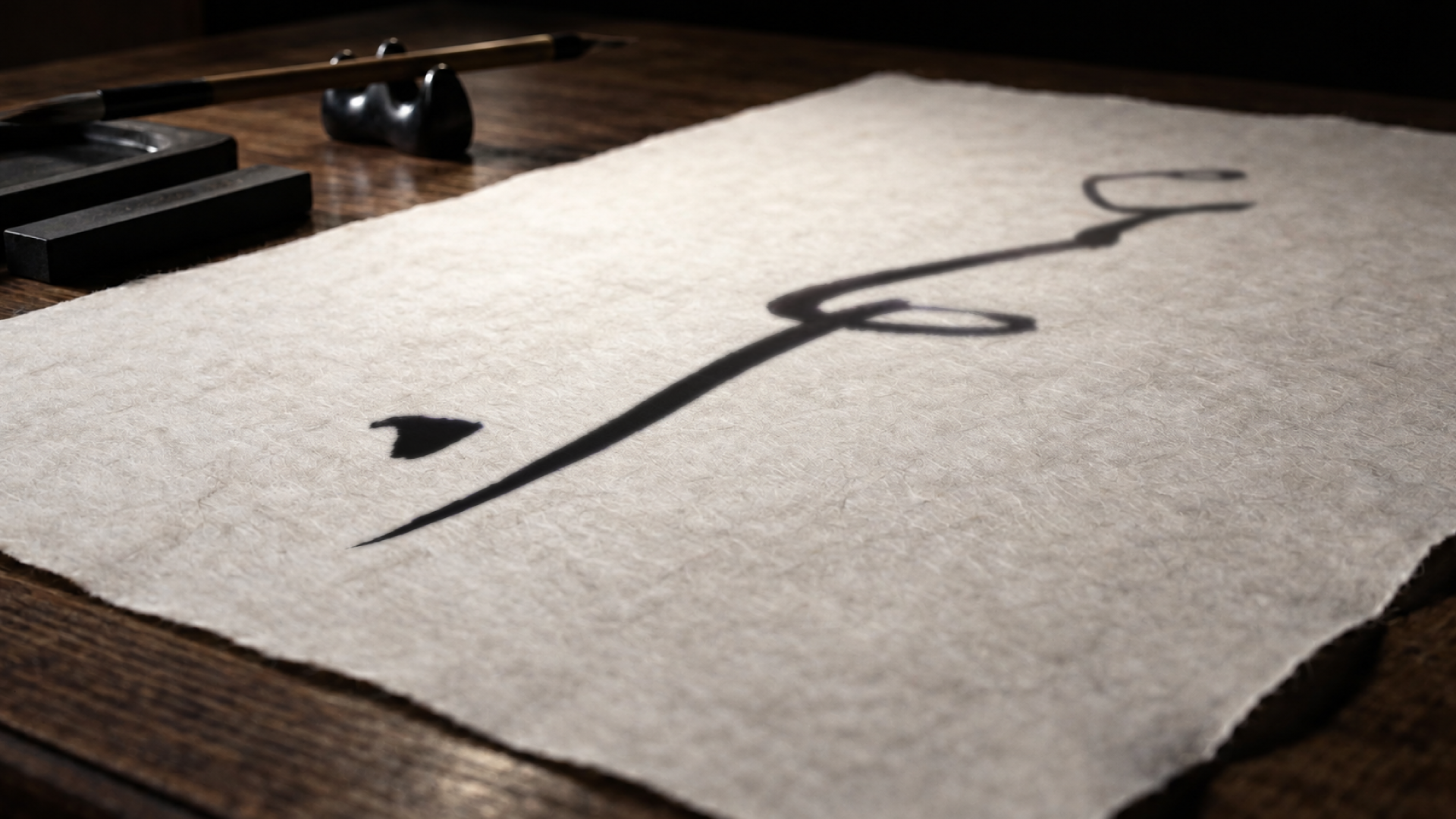
She lifted the paper and handed it to him.
“Take it.”
The ink had not fully dried. It caught the light faintly.
Gabi did not know what the word meant. Yet the shape felt familiar, as if it had been waiting inside him long before he saw it written.

The white was not empty.
It was waiting.